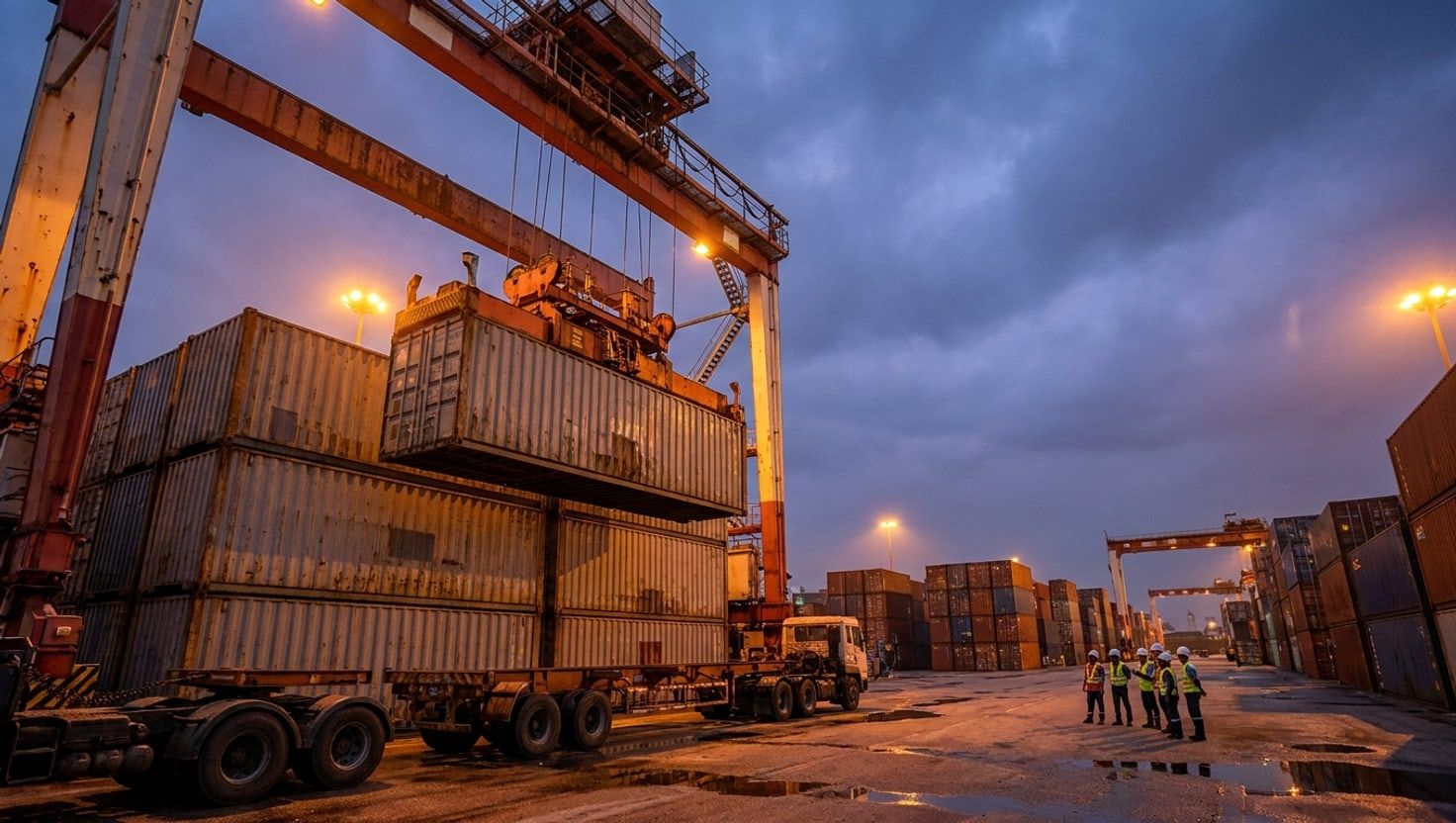

LCL (Less than Container Load) means your cargo shares a container with other shipments and you pay by CBM; FCL (Full Container Load) means you rent an entire container at a fixed rate. For cargo from Port Klang to Sabah, LCL is usually cheaper up to around 12–15 CBM — beyond that, a full container is usually the cheaper option. Contact a cargo officer for the exact break-even for your goods.
What Is LCL (Less than Container Load)?
LCL means your cargo shares space inside one container with other customers' shipments. You only pay for the volume (CBM) your goods actually use — not the price of a whole container — which makes it the most affordable option for small to medium shipments such as a house move, restocking a shop, or sending a few pieces of furniture.
The trade-off is that your goods are consolidated with other shipments at the Port Klang warehouse before loading, so the process takes a little longer than FCL, which can be sealed directly at your premises. Our Cargo Shipping service offers LCL as the default method for most general-cargo customers.
What Is FCL (Full Container Load)?
FCL means you rent one container — usually 20ft or 40ft — entirely for your own shipment, even if your goods don't fill it completely. The container can be sealed directly at your premises and stays unopened until it reaches the destination, so it is faster and offers more privacy and cargo security.
FCL suits a full house or office move, large-scale restocking, or high-value goods you don't want to share space with. FCL pricing is quoted directly by our cargo officer — it depends on container size and route, not a flat rate like LCL.
The LCL vs FCL Break-Even Point — In Ringgit
The LCL rate for Port Klang → Kota Kinabalu starts at RM450 per CBM (1 CBM minimum charge), confirmed on Shipping Cargo to Sabah. Port Klang → Kuching runs at the SAME published rate, confirmed on Shipping Cargo to Sarawak — while Bintulu, Sibu and Miri are quoted once your booking is confirmed.
LCL cost rises linearly with your CBM, for either Kota Kinabalu or Kuching:
- 5 CBM → 5 × RM450 = RM2,250
- 10 CBM → 10 × RM450 = RM4,500
- 12 CBM → 12 × RM450 = RM5,400
- 15 CBM → 15 × RM450 = RM6,750
At 12–15 CBM, LCL cost already reaches RM5,400–RM6,750 — this is where a full container (FCL) usually becomes cheaper, because you pay a fixed container rate instead of a per-CBM rate. Below this range, LCL almost always wins, since you only pay for the volume you actually use instead of paying to fill an empty container.
The published rate above applies to both Kota Kinabalu and Kuching. Your actual break-even can shift slightly by destination and cargo type — confirm with a cargo officer for an exact calculation before booking.
When Is LCL Cheaper?
- Your total cargo is under 12 CBM — you only pay for the volume you actually use.
- The shipment isn't urgent — goods need to be consolidated with other cargo first, so the process takes a little longer.
- Ordinary goods (boxes, furniture, household items) with no special privacy needs.
- You want flexibility — no need to fill a whole container before you can ship.
When Is FCL Cheaper?
- Your total cargo exceeds 12–15 CBM — a fixed container rate becomes cheaper than paying per CBM.
- A full house or office move, or large-scale shop restocking.
- High-value or sensitive goods you don't want to share space with other shipments.
- You want the container sealed directly at your premises and left unopened until destination — faster and more secure.
How to Measure Your CBM
CBM (cubic metre) is calculated from length × width × height × quantity for each carton or pack. If your measurements are in centimetres, divide the product by 1,000,000 to get CBM. Measure the packed dimensions (including pallets and crates), not the bare goods alone — packaging also takes up container space.
Use our CBM Calculator to get an instant estimate of your total CBM and LCL cost, without doing the maths yourself. Once you know your actual CBM total, compare it against the table above to decide whether LCL or FCL is cheaper for your shipment.
What LCL and FCL Do NOT Include
Quoted LCL and FCL rates are for port-to-port freight only — they do not include door-to-door pickup/delivery, special customs charges, or Marine Insurance. Marine Insurance is arranged and quoted separately for each shipment, based on the declared value of the goods; it is not part of the published CBM rate or container rate.
Confirm with our cargo officer exactly what your quote covers — especially if your shipment needs pickup in the Klang Valley or delivery to an address in Sabah/Sarawak, as these are separate add-on charges.
Risks & Delays: What You Should Know
Delays happen, usually for reasons no one controls. The monsoon and rough seas can push sailings back, vessel schedules change at short notice, and port congestion slows unloading. Incomplete paperwork — especially the bank release letter for a financed vehicle — holds up clearance at the destination port.
To reduce that risk: book early around festive peaks, arrange the bank release letter in advance, and declare any added accessories at inspection. Our rates are port to port and exclude Marine Insurance — Marine Insurance is what covers your cargo's value in transit. We never promise a guaranteed arrival date; in transit, risk stays with the vehicle owner unless Marine Insurance is in place.
FAQ
What's the difference between LCL and FCL?
LCL means your cargo shares container space with other shipments and you pay by the CBM you use. FCL means you rent one container entirely for your own shipment at a fixed rate, even if your goods don't fill it.
How many CBM before FCL is cheaper than LCL?
As a general guide, once your total cargo approaches or exceeds 12–15 CBM, renting a full container is usually cheaper than paying per CBM under LCL. The exact break-even depends on the route and the current FCL quote — confirm with a cargo officer.
Does the LCL rate include Marine Insurance?
No. Marine Insurance is arranged and quoted separately for each shipment, based on the declared value of the goods. The published CBM rate is for port-to-port freight only.
Can I switch from LCL to FCL after booking?
Yes, as long as the shipment hasn't been consolidated for loading yet. Contact a cargo officer as soon as possible if your cargo volume changes after your initial quote so we can prepare an accurate FCL quote.
Is LCL safe for fragile or high-value goods?
LCL is safe for most general cargo, but very high-value or sensitive goods are better suited to FCL since the container is sealed directly and not shared with other shipments. Talk to our officer if you're unsure which method fits your goods.
Get an LCL or FCL Quote Today
Calculate your total CBM with the CBM Calculator, or contact our cargo officer for an exact LCL vs FCL break-even based on your goods and route.