Shipping a Commercial Oven · Selangor → Kota Kinabalu
A kitchen-equipment business opening a new branch in Kota Kinabalu needed to ship a commercial oven (16 cartons) safely. Rentaka handled it via LCL — pickup in Selangor, packing & container consolidation, sailing to Sepanggar, and delivery to the KK branch.
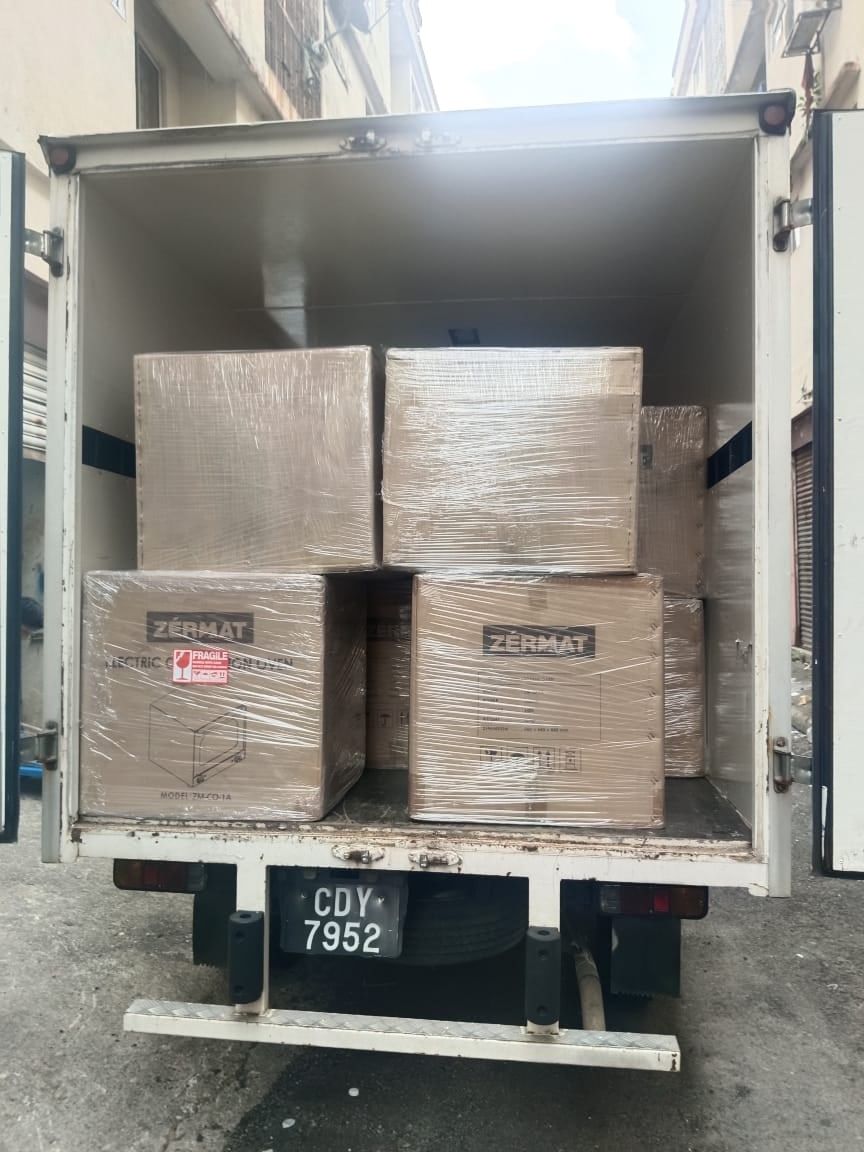
Rentaka shipped this commercial oven from Selangor to Kota Kinabalu as LCL cargo — 16 cartons across three sizes, just under 4.2 CBM. We collected in Klang, shrink-wrapped and timber-braced the stack at Port Klang, consolidated it into a shared container, and delivered straight to the new branch after clearance.

Published Last updated
- Vessel
- Harbour Zircon
- Voyage
- ZR051
- Container
- FCIU5390350
- ETA
- 8 Jun 2026
- Route
- Klang, Selangor → Kota Kinabalu, Sabah
- Method
- LCL (shared container)
- Cargo
- Commercial Oven
- Quantity
- 16 cartons
- Port
- Port Klang → Sepanggar (Kota Kinabalu)
- Vessel
- Harbour Zircon · ZR051
- Container No.
- FCIU5390350
- ETA
- 8 Jun 2026
// 16 cartons in 3 sizes (69×66×60 ×4 · 65×66×60 ×11 · 66×68×61 ×1 cm)
What made this job difficult.
The hard part of this job was never the distance — it was what sat inside the cartons. A commercial oven is bulky electrical equipment: panels, hinges and internal components that do not forgive knocks. It arrived as 16 cartons across three different sizes, so there was no single uniform stacking pattern to fall back on; every layer had to be planned so the larger cartons never bore down on the smaller ones. The customer was also opening a new branch in Kota Kinabalu, which meant this was not simply freight — it was the equipment that decided when that kitchen could start trading. One crushed carton would have cost more than the goods; it would have cost the opening date.
Why LCL was the right call
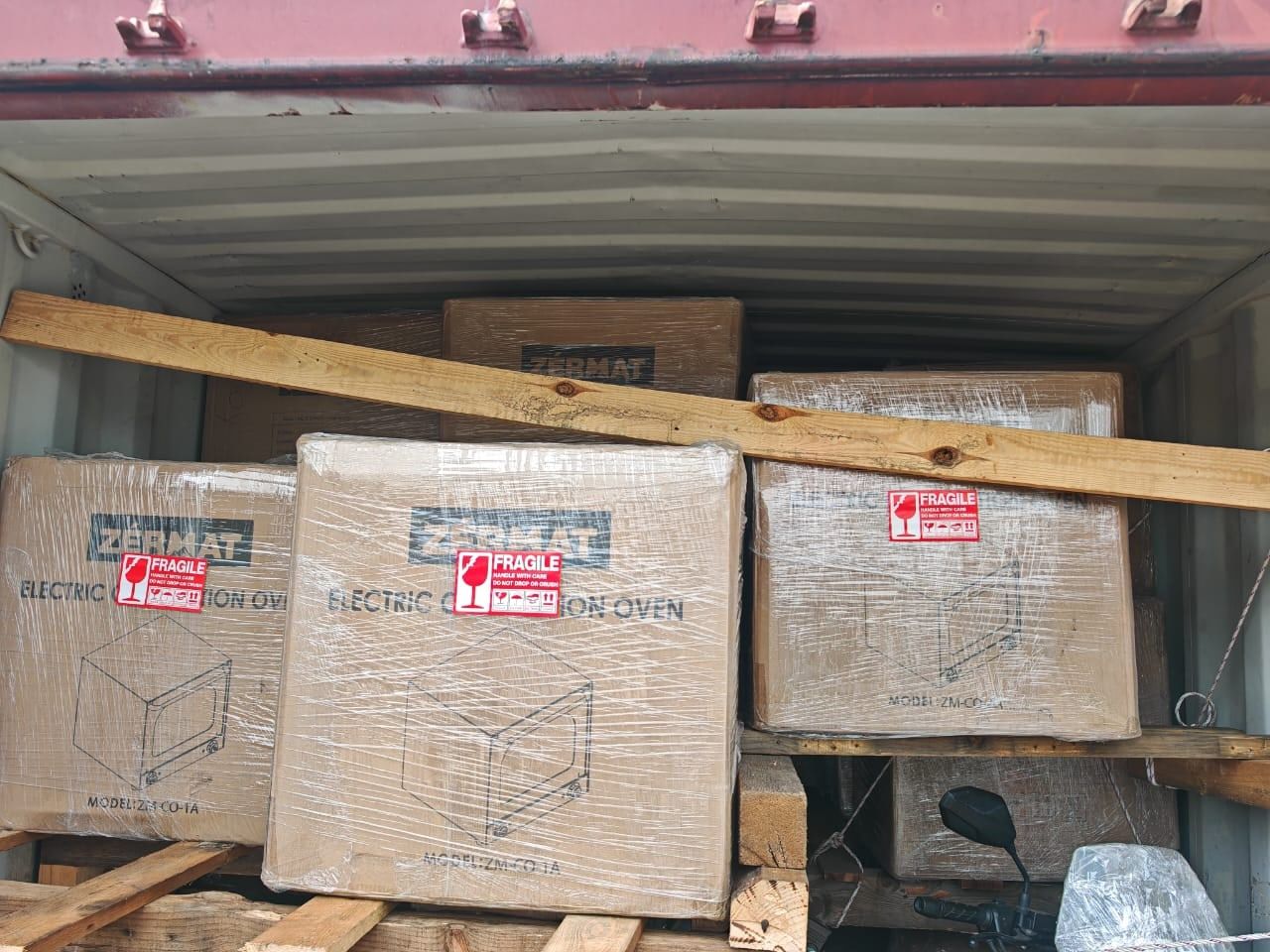
We confirmed the total CBM from the dimensions of all three carton sizes before quoting, and the number pointed clearly to LCL. Sixteen cartons is a substantial consignment for one customer, but nowhere near enough to fill a container. Booking a full container would have meant paying for empty space; LCL let the customer pay for the volume they actually occupied. Crucially, LCL did not mean looser handling. Because the cargo shares a container with other consignments, the quality of the bracing matters more, not less. That is why every carton was shrink-wrapped and marked FRAGILE, and why the whole stack was braced with timber at Port Klang so nothing could shift once the container was sealed and at sea.
Every phase, documented.
How we handled it.
A meticulous process from pickup to delivery — every step documented and reported to the customer.
- 01// Pre-Shipping
Inquiry & Measurements
Customer shared the list & dimensions of 16 oven cartons. We confirmed the total CBM and that LCL was the right fit.
- 02// Pre-Shipping
Quote & Booking
LCL port-to-port + pickup quote issued. Customer confirmed and we booked the container slot.
- 03// Pickup
Pickup in Selangor
Our lorry collected all 16 cartons from the customer location in Klang, Selangor.
- 04// Pre-Loading
Packing & Protection
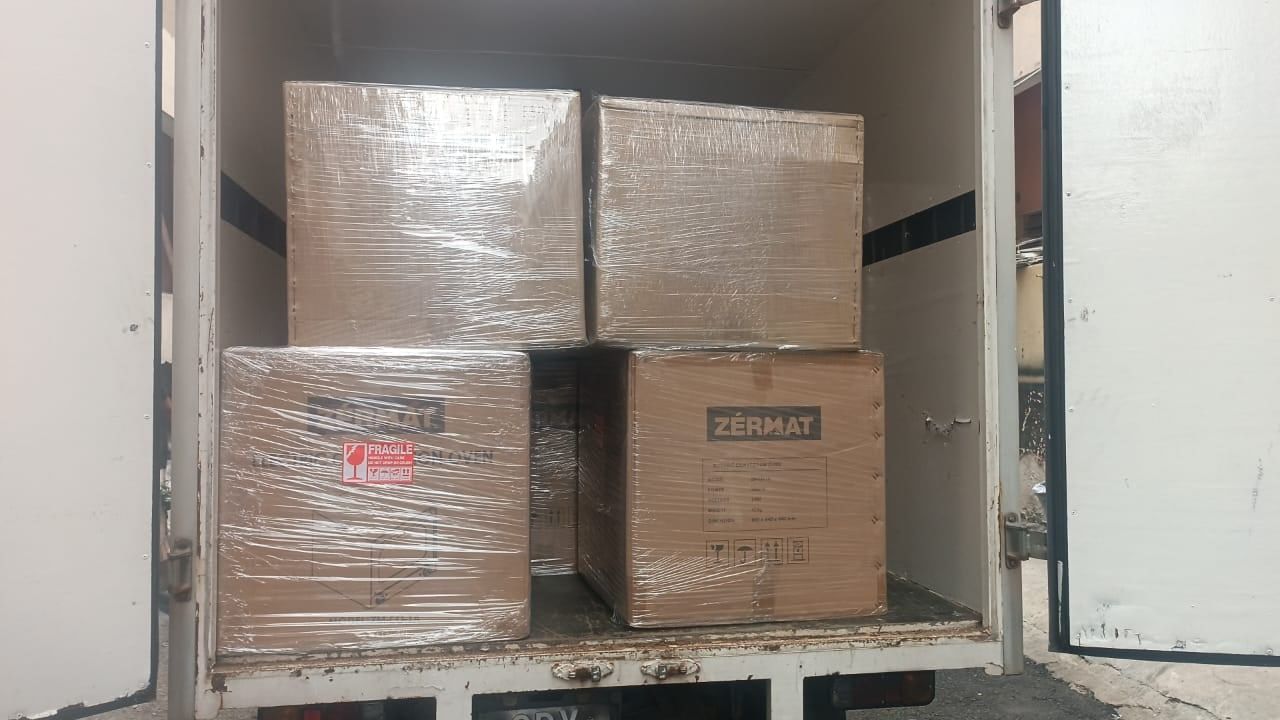
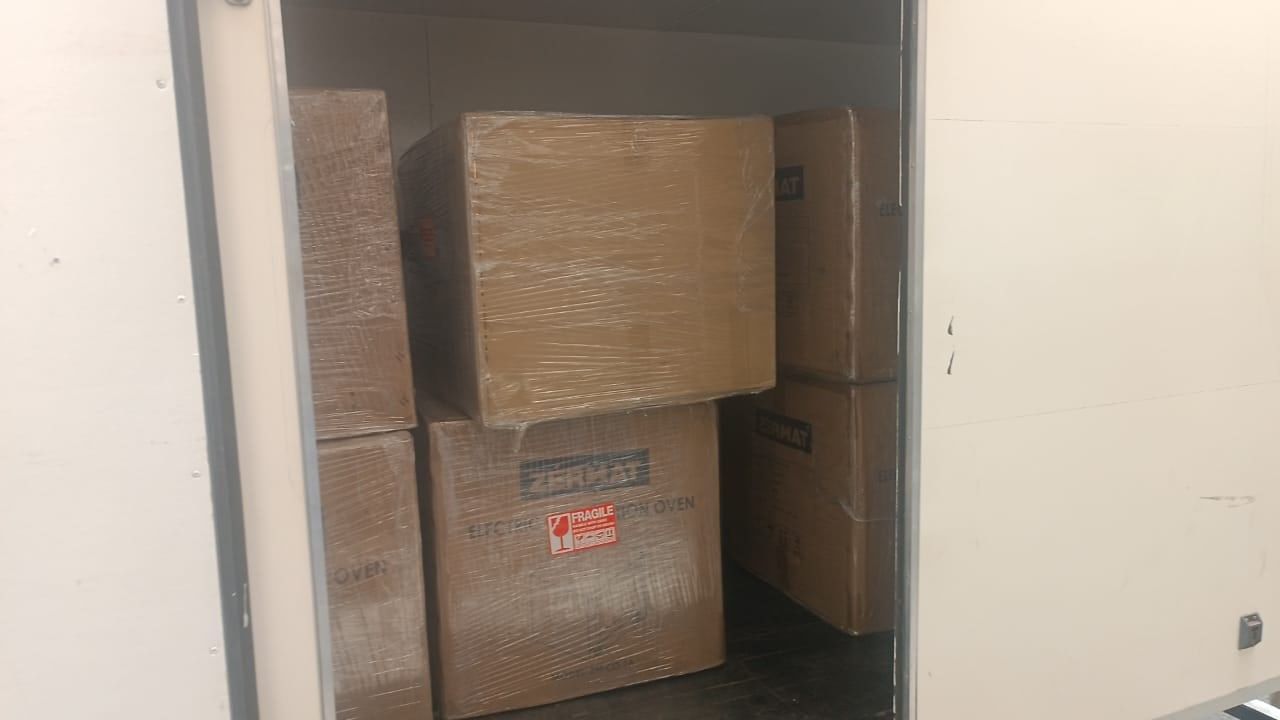
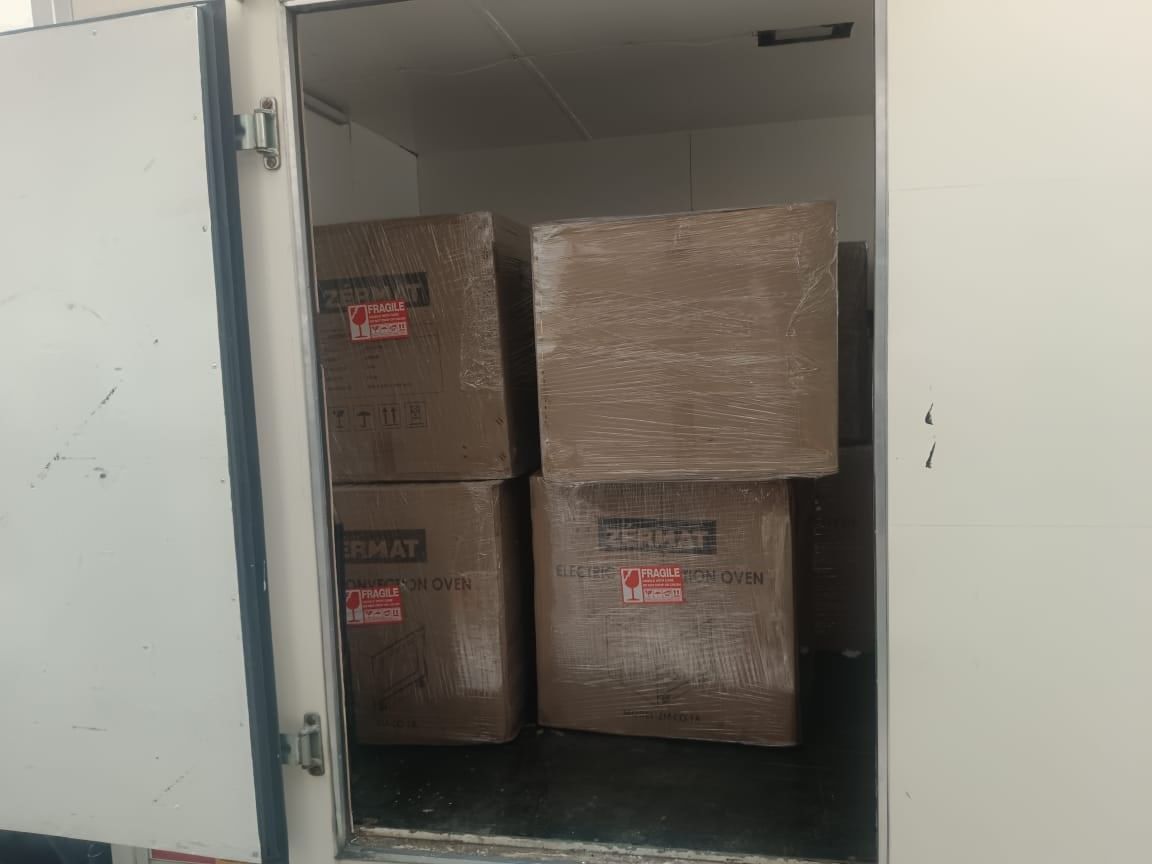
Each carton shrink-wrapped, marked FRAGILE, and stacked safely — electrical goods need careful handling.
- 05// Sea Transit
Consolidation & Container Stuffing
Cartons consolidated into the container at Port Klang, braced with timber so nothing shifts during the voyage.
- 06// Sea Transit
Sailing to Sepanggar
The container sailed from Port Klang to Sepanggar Port, Kota Kinabalu aboard the vessel Harbour Zircon (ZR051).
- 07// Post-Arrival
Sabah Clearance
Arrived at Sepanggar (ETA 8 Jun 2026); container offloaded and port clearance handled.
- 08// Post-Arrival
Delivery to KK Branch
All 16 cartons delivered safely to the customer’s new branch in Kota Kinabalu.
The detail that decided it.
The measurements, the packing and the method choice — and what to copy if you are planning something similar.
What the carton list told us
Before any price was quoted, the first job was turning the carton list into volume. The CBM formula we use is the same one behind the calculator on our cargo page: length × width × height × quantity, with centimetre measurements divided by 1,000,000 to give cubic metres. On this consignment, the four 69×66×60 cm cartons came to roughly 1.09 CBM, the eleven 65×66×60 cm cartons to roughly 2.83 CBM, and the single 66×68×61 cm carton added about 0.27 CBM. Added together, that is just under 4.2 CBM.
That number settled two things at once. First, it sat comfortably above the 1 CBM minimum billing threshold, so the customer paid for the volume they actually had rather than a floor price. Second, it was still nowhere near enough to fill a container — which is where the LCL decision made itself. One thing people routinely get wrong here: measure the packed carton, not the product box or the oven itself. Bubble wrap, pallets and protective layers all occupy container space, and all of it counts.
What the packing was actually protecting against
Inside a shared container your cargo does not travel alone. It shares the space with other consignments that may be heavier, harder, and packed by someone else entirely. That is why three layers of protection went onto this job, each doing a different thing. Shrink-wrap held the cartons closed and kept surface moisture off. The FRAGILE marking told everyone who touched a carton at the yard and at the port that this was not ordinary stock. The timber bracing at Port Klang mattered most of all: it locked the stack in place so there was no void left for a carton to travel into when the vessel moved.
Three different carton sizes made this harder than it looks. No uniform stacking pattern was available, so the layers had to be planned deliberately so the four largest cartons never rested on the smaller ones. If you are packing your own goods for a shipment like this, that is the part worth copying: sturdy boxes or crates, clear labelling, and no empty voids left inside the stack. It also matters after arrival — proper packing is the foundation of a smooth claim if anything does go wrong, and Marine Insurance is billed separately from the freight, with the premium and coverage confirmed alongside your quote.
Why this one ran door-to-door
We run four methods, and which one you pick reshapes the whole job. Port-to-port means you deliver to Port Klang yourself and collect at the Sabah port yourself — the cheapest option. Door-to-port and port-to-door each close one end of that gap. This oven job used both ends: our lorry collected all 16 cartons in Klang, and the same cartons were set down at the customer’s new branch in Kota Kinabalu after clearance. That is full door-to-door, and for someone opening a branch it was the sensible call — they had no one standing at Sepanggar port waiting on a container.
The pricing point worth understanding: the per-CBM rate published on our cargo pages covers port-to-port only. Klang Valley pickup and Sabah delivery are costed separately and re-checked against the actual addresses, because distance and site access vary. If you would rather avoid the pickup charge, the alternative is dropping your goods at our Klang yard yourself, and consolidation starts from there. Say which method you want in your very first enquiry — it moves the price more than most people expect.
What to have ready for a similar shipment
For general cargo we need three things before anything can move: an inventory list with the packed carton dimensions, the Sabah recipient’s details (name, full address and phone number), and what the goods actually are. For high-value items or business equipment like this oven, a purchase invoice or receipt helps with both insurance and clearance. Photos speed things up too — the CBM calculator on our cargo page lets you attach an image alongside the estimate you send through to WhatsApp.
Two more things apply specifically to business shipments. First, if the consignment has to pass through company finance or accounting approval, ask for the written quote with a reference number and a proper invoice — we issue these for SMEs and corporate bookings as a matter of course. Second, confirm the goods type early if it involves electrical components, batteries, or anything that might fall under restricted-goods rules. And on scheduling: sailing dates can shift with weather and port operations. If yours moves, we tell you on WhatsApp and put you on the nearest following sailing, with no rescheduling charge from our side.
How it landed.
Container FCIU5390350 sailed from Port Klang to Sepanggar Port aboard the vessel Harbour Zircon (ZR051) and arrived on the ETA the customer had been given. All 16 cartons were offloaded, cleared at the port, and delivered to the new branch in Kota Kinabalu — the same count that was collected in Klang, nothing missing and nothing damaged. The takeaway from this job is a simple one: accurate measurements at the start decide the right method and the right price, while proper packing decides what condition the goods arrive in. Both of those are settled before the vessel ever leaves. If you are planning a similar equipment shipment, have a carton list with packed dimensions ready — that is genuinely all we need to begin.
Working out an estimate for your own consignment? The CBM calculator on our cargo shipping to Sabah page lets you enter your carton dimensions and see the actual volume before you ask for a price. For the wider picture of LCL and full-container options, start at the cargo shipping hub. And if a branch opening like this one also involves moving a vehicle, see our car shipping service to Kota Kinabalu.
What people ask about this job.
How many CBM was this oven shipment?
Just under 4.2 CBM. The four 69×66×60 cm cartons came to roughly 1.09 CBM, the eleven 65×66×60 cm cartons to roughly 2.83 CBM, and the single 66×68×61 cm carton added about 0.27 CBM.
Why LCL rather than a full container?
Sixteen cartons is a substantial consignment for one customer, but nowhere near enough to fill a container. Booking a full container would have meant paying for empty space; LCL let the customer pay for the volume they actually occupied.
Which dimensions do I give — the product box or the packed carton?
Measure the packed carton, not the product box. Bubble wrap, pallets and protective layers all occupy container space, and all of it counts.
Does the per-CBM rate include pickup and delivery?
No. The per-CBM rate published on our cargo pages covers port-to-port only. Klang Valley pickup and Sabah delivery are costed separately and re-checked against the actual addresses.
Is Marine Insurance included in the freight?
No. Marine Insurance is billed separately from the freight, with the premium and coverage confirmed alongside your quote.
Which vessel and container carried this shipment?
Container FCIU5390350 sailed from Port Klang to Sepanggar Port aboard the vessel Harbour Zircon, voyage ZR051, and arrived on the ETA the customer had been given.
Import clearance at the arrival port is handled under the Royal Malaysian Customs Department, while Port Klang — the departure port for this shipment — is operated by the Port Klang Authority. Our company registration can be verified through the Companies Commission of Malaysia.
📦 Want to ship cargo like this to Sabah?
From ovens to business stock — we handle it meticulously, fully documented. Get an instant estimate.