
What Is RORO?
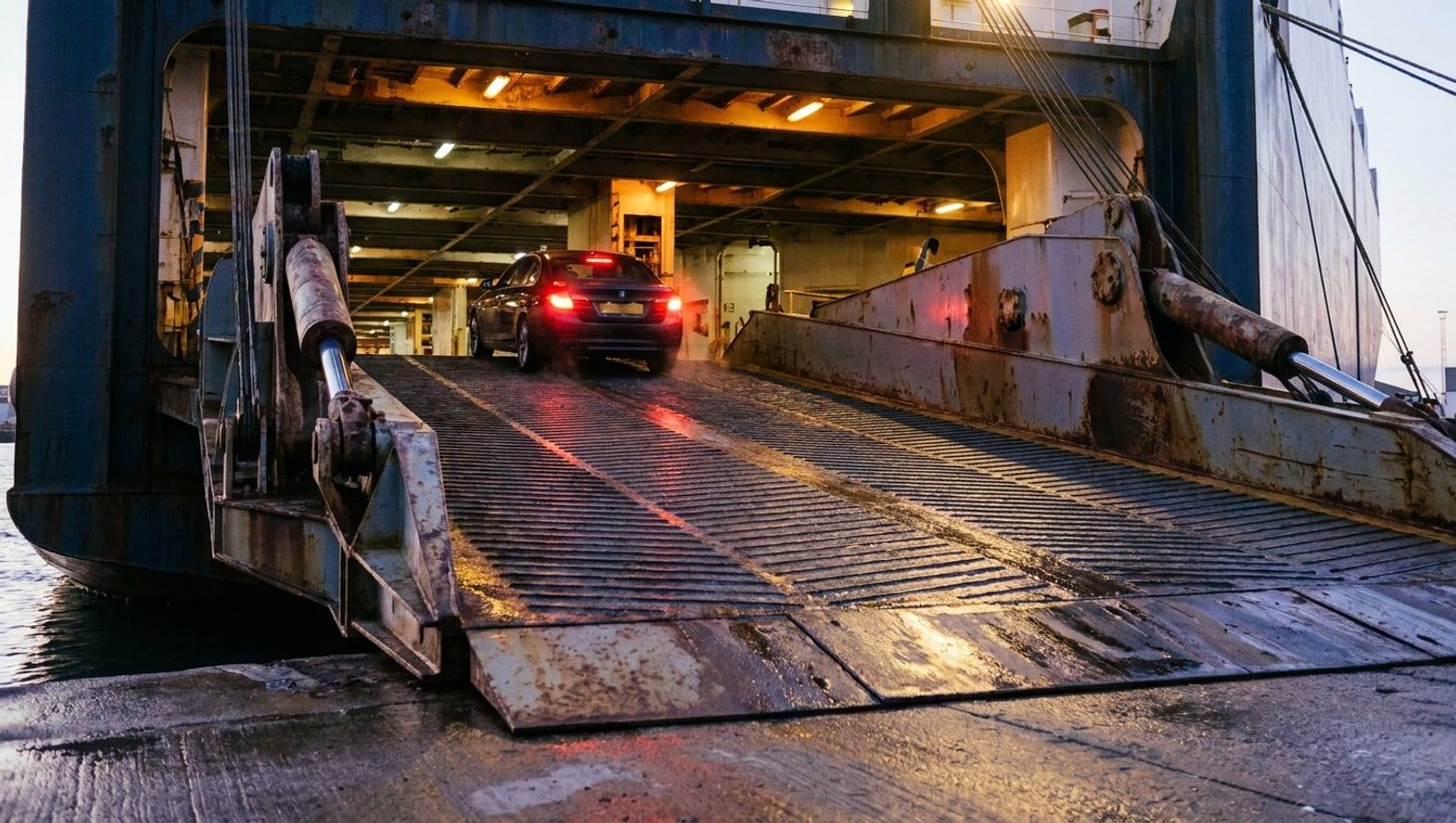
RORO stands for Roll‑on/Roll‑off. Your vehicle is driven up a ramp onto the vessel under its own power, secured to the deck for the crossing, then driven off at the other end — no crate, no crane. For East Malaysia it sails from Port Klang to Kota Kinabalu, Kuching or Bintulu.
RORO (Roll‑on/Roll‑off) is a shipping method where vehicles are driven directly onto a specialised vessel via built‑in ramps at the port.
The car is secured on a designated deck and remains stationary throughout the voyage. At the destination port, it is simply driven off the ship.
No crates, cranes, or lifting equipment are required. This drive‑on, drive‑off process dramatically reduces handling risk and speeds up turnaround times.
In Malaysia, RORO is the backbone of vehicle logistics across the South China Sea. Ports like Westports and Northport in Port Klang serve as key hubs for sailings to Kota Kinabalu, Kuching, and Bintulu.
Our fleet includes purpose‑built RORO carriers such as RORO Northport and RORO Westports, built to Malaysian Marine Department standards.
How Does RORO Work for Shipping to Sabah/Sarawak?
The RORO process follows a tidy sequence designed for safety and efficiency. Here’s how a typical shipment from Port Klang to East Malaysia unfolds:
- 01
Documentation and Booking
Submit your booking with vehicle details (make, model, chassis number). You’ll need a copy of the vehicle registration card (VOC) from JPJ and owner’s IC. We handle the customs declaration using K1/K9 forms for domestic transfers.
- 02
Vehicle Inspection
Before the sailing date, the car undergoes a pre‑shipment inspection. This checks for damage, verifies fluid levels, and confirms the battery is secured. While not mandatory for all shipments, we recommend a PUSPAKOM voluntary inspection for complete peace of mind.
- 03
Delivery to the Port
Drive the vehicle to the appointed loading bay at Westports or Northport. Our ground crew will guide you into the holding area.
If driving it in yourself is impractical — and from Kelantan or Johor that means a long trip plus a flight home — there are two alternatives. Car carrier transport runs from nine Peninsular states, moving the vehicle on a truck so it adds no mileage at all. Or a jockey driver comes to your address, inspects the car with you, photographs it, signs a handover form, and drives it to our Klang yard ahead of loading. What jockey drive is compares the two properly.
- 04
Loading
A RORO stevedore drives the car up the stern ramp onto the vessel. The vehicle is lashed to the deck with wheel chocks, lashing belts, and tire nets — a procedure aligned with MARIi marine safety guidelines.
- 05
Customs Clearance & Pickup
After the sailing, our port agent clears customs at Kota Kinabalu, Kuching, or Bintulu. Once the vessel berths, you can pick up the vehicle directly from the port compound or arrange local delivery.
How Much Does RORO Shipping Cost?
Shipping costs with Rentaka Logistics are transparent and fixed — no hidden surcharges. Pricing depends on vehicle type and destination, and we publish bundled rates covering port charges, lashing, and documentation.
Indicative rates for 2026 (prices may fluctuate with fuel surcharges; check the latest via the quote form):
- Sedan to Kota Kinabalu: RM2,245
- Sedan to Kuching: RM2,450
- Sedan to Bintulu: RM2,300
- SUV/MPV to Kota Kinabalu: RM2,490
- SUV/MPV to Kuching: RM2,580
- SUV/MPV to Bintulu: RM2,430
- Motorcycle to Kota Kinabalu: RM1,215
- Motorcycle to Kuching: RM1,390
- Motorcycle to Bintulu: RM1,390
Need a quote for a heavy vehicle or modified car? Our team calculates bespoke rates using the same fair formula. Get an exact, all‑in price in minutes through our online quote form.
Read those figures as from prices, because two things move them. Outbound cargo leaves Port Klang through two separate terminals, Northport and Westports, whose tariffs are not identical even for the same vehicle class — the rate quoted here takes the lower of the two, so the terminal with capacity on your sailing date can shift the total. Separately, the return direction from Borneo back to Port Klang carries its own tariff and is not a mirror of the outbound rate, so a round trip is not simply double. Pickups, vans, lorries and heavy machinery have no published rate at all and are priced directly by an officer. The complete matrix is on the car shipping rates page.
One item is deliberately outside the freight rate: Marine Insurance. Rates are port‑to‑port and exclude it, because the premium is calculated from your vehicle's own Insured Value and cannot be flattened into a single freight figure. Your existing comprehensive motor policy does not follow the car onto the vessel either — sea‑leg cover comes from a separate marine cargo policy opened once per voyage. The premium is confirmed alongside your quote; the marine cargo insurance guide explains how it is calculated and how a claim actually proceeds.
How Long Does Shipping Take Using RORO?
Transit time from Port Klang to East Malaysia depends on the port of discharge and sea conditions. On average, you can expect:
- Standard transit (sedan, motorcycle): 10–14 days
- Heavy or oversize vehicles (due to loading sequencing): 15–25 days
Note that festive seasons — Hari Raya, Gawai Dayak, Kaamatan, or Chinese New Year — can extend door‑to‑door time by a few days. We advise booking early during these periods.
For up‑to‑date sailing schedules and berthing windows, always refer to our ship schedule page. It lists every confirmed RORO departure.
It is worth being precise about what 10–14 days actually measures, because this is the single most misread number in car shipping. It is an end‑to‑end figure: confirmed booking through to the vehicle being ready for collection — not the time the ship spends at sea. The South China Sea crossing itself is the shorter part of that window. The rest goes on handing the vehicle over ahead of the sailing, customs clearance at both ends, and the gap between the vessel berthing and the car being released from the port compound.
This is why planning around the sailing date alone tends to disappoint. Count backwards from the day you genuinely need the keys in your hand, not from the day the ship leaves. Our guide on how long shipping a car to Sabah and Sarawak takes breaks the window down stage by stage, and if your move lands near a festive period, shipping a car during the festive season explains why slots close out far earlier than people expect.
What RORO Cannot Carry
RORO handles almost every private vehicle, but it is not a universal answer. Three limits are much better discovered now than at the terminal gate.
Electric vehicles. RORO sailings to Sabah and Sarawak do not accept EVs, on lithium‑battery fire‑safety grounds. That is a carrier condition rather than a Rentaka policy, and it is not negotiable at the quayside. Your EV can still reach Borneo — it travels inside an enclosed container, with broadly the same paperwork and process. The recommended state of charge and the rest of the detail are covered in shipping an EV.
Personal belongings left in the car. Not strictly forbidden, but a reliable way to create problems. Items in the cabin are not covered by marine cargo insurance, and their presence can hold up customs clearance when the vehicle's contents don't match the declaration. If you are genuinely moving house, send the goods as separate cargo through shipping cargo to Sabah, where they are priced by volume (CBM) rather than smuggled into the boot.
Very high‑value vehicles. RORO is safe, but the vehicle deck is shared space. For a luxury or classic car — anything you would not want to see scuffed — a dedicated container gives an enclosed, single‑occupancy environment. It costs more, and whether that is worth paying turns on the value of the car rather than its size. The trade‑off is laid out in RORO shipping versus container.
What Vehicle Preparation Is Needed Before Shipping?
Proper preparation prevents delays and protects your vehicle. Use this checklist before the handover day:
- 01
Complete Documents
Prepare:
- Original Vehicle Registration Card (VOC) — must be valid and transferred to the owner’s name, as per JPJ regulations.
- Owner’s IC (or passport for foreign owners).
- Insurance cover note — third‑party is sufficient, but comprehensive is recommended.
- Customs declaration — we assist with K1/K9 forms, but you must sign the declaration.
- 02
Mechanical Condition
Ensure the vehicle is in running condition — RORO requires the car to be driven on and off. Check:
- Battery charged and terminals tight.
- Tyre pressures correct.
- No major fluid leaks.
- Fuel level below ¼ tank (safety regulation). If the car cannot move under its own power, special handling is needed — inform us before booking.
- 03
Personal Belongings
Personal belongings are not covered by marine cargo insurance and may delay customs clearance. Remove all loose items from the cabin and boot. A single small bag containing essentials (jack, warning triangle) may be permitted if declared in the inventory list.
- 04
Final Inspection
Photograph the vehicle from all angles at the port. This documentation, combined with our condition report, protects you in the unlikely event of a claim. We also conduct a joint inspection with the PUSPAKOM station if a mandatory test is required.
Frequently Asked Questions About RORO
Below are answers to the most common queries from vehicle owners sending their cars to Sabah and Sarawak.
Risks & Delays: What You Should Know
Delays happen, usually for reasons no one controls. The monsoon and rough seas can push sailings back, vessel schedules change at short notice, and port congestion slows unloading. Incomplete paperwork — especially the bank release letter for a financed vehicle — holds up clearance at the destination port.
To reduce that risk: book early around festive peaks, arrange the bank release letter in advance, and declare any added accessories at inspection. Our rates are port to port and exclude Marine Insurance — Marine Insurance is what covers your cargo's value in transit. We never promise a guaranteed arrival date; in transit, risk stays with the vehicle owner unless Marine Insurance is in place.
FAQ
Is RORO safe for my car?
Yes, RORO is extremely safe. Vehicles are driven at walking speed onto the vessel and secured by trained stevedores using chocks, lashings, and tyre nets. The enclosed deck protects against weather, and the drive‑off eliminates crane lifting risks. We have not recorded a single handling damage claim in two years following our MARIi safety protocol.
Can I ship a car that does not yet have a registration number?
In most cases, yes, as long as you hold the original JPJ receipt for the new registration or a valid Customs Form K1 for imported vehicles. The engine and chassis numbers must match the documentation. We recommend contacting our team with your specific case before booking.
How often do RORO vessels operate to Sabah/Sarawak?
Our RORO carriers sail frequently to Kota Kinabalu, Kuching, and Bintulu. Check the latest confirmed departure dates on our ship schedule page. During festive months like Gawai or Hari Raya, we often add extra sailings to meet demand.
Is marine insurance included in the price?
Rates are port-to-port and exclude Marine Insurance. The premium is calculated from your vehicle's Insured Value — referencing your existing vehicle insurance policy — and confirmed together with your quote. We strongly advise arranging comprehensive marine cargo insurance through us at a competitive rate — details will be provided in your quotation.
Get Your RORO Shipping Quote
Fill in your vehicle and route details for a fixed price and a real transit time.